Arduino-Based Redundant Transmission for Buoy Networks
Project Overview
The project implements a resilient communication network for marine buoys, ensuring reliable data transmission despite environmental challenges. Signal transmission in marine environments is often hindered by interference, range limitations, and power constraints. This project leverages redundant transmission methods to enhance reliability.
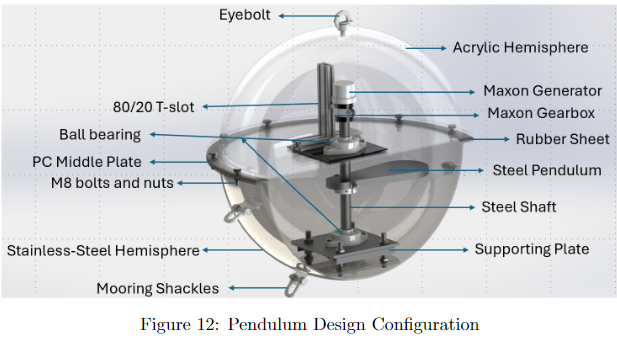
Pendulum Design Configuration
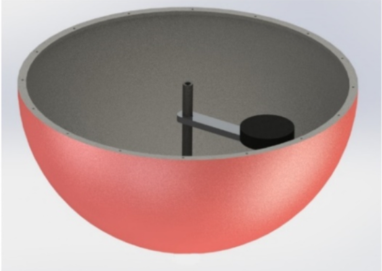
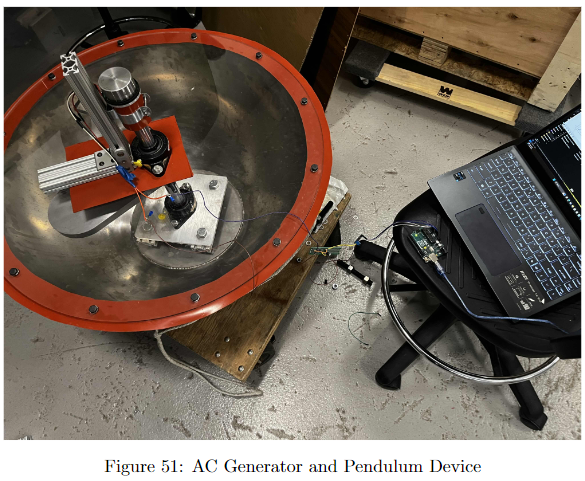
The system utilizes a pendulum-based energy harvesting mechanism within a protective hemisphere. Key components include an acrylic hemisphere, steel pendulum, and Maxon generator, which work together to convert wave motion into electrical energy.
Core Features
To ensure robust communication, the system implements:
- Redundant Data Transmission: Dual-path communication enhances reliability.
- Arduino-Based Control System: Ensures efficient signal processing and relay.
- Error Correction Techniques: Data redundancy minimizes transmission losses.
- Low Power Consumption: Optimized for extended deployments at sea.
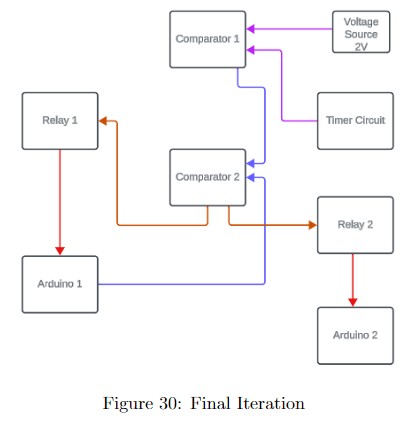
Network Design
The network topology demonstrates the redundant transmission paths that increase reliability and fault tolerance.
Technical Implementation
Hardware Components
The project integrates multiple hardware components to ensure efficient operation:
- Arduino Uno: Serves as the core processing unit.
- nRF24L01 Radio Module: Facilitates wireless communication.
- Custom Energy Production System: A pendulum-based generator extracts energy from wave motion.
- Environmental Sensors: Includes temperature, humidity, and GPS sensors for real-time monitoring.
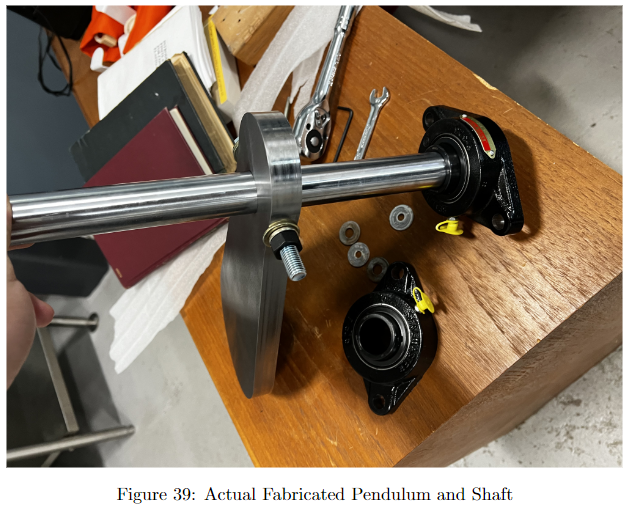
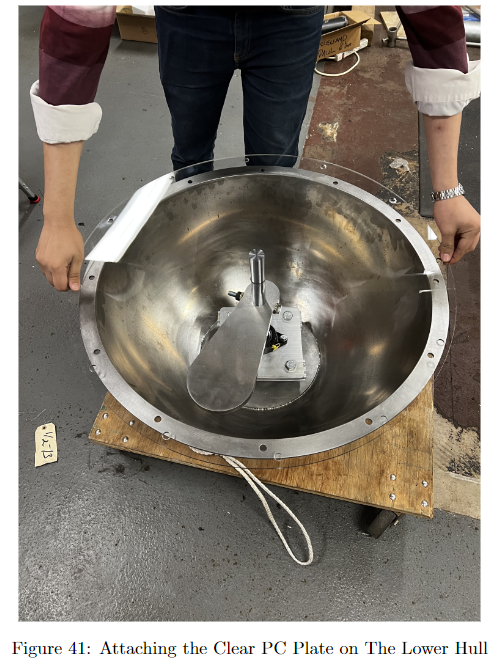
Fabricated Pendulum and Shaft1
Fabricated Pendulum and Shaft2
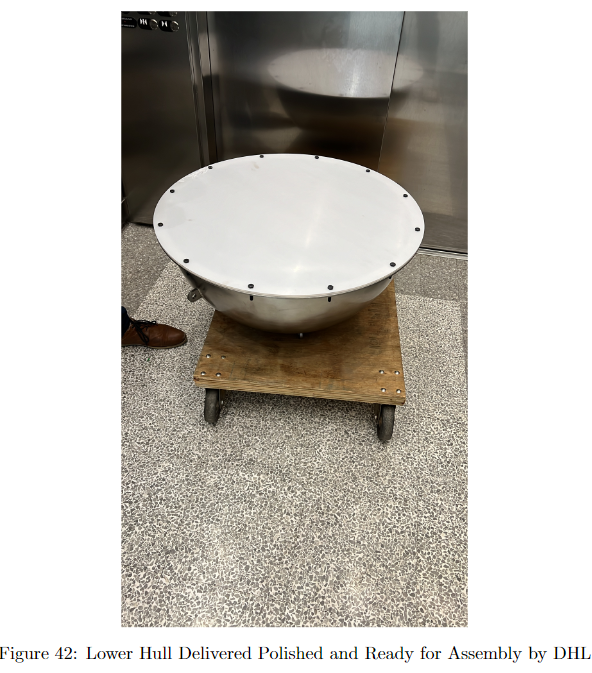
Fabricated Pendulum and Shaft3
The fabricated pendulum mechanism is crucial for the energy harvesting process. By leveraging wave-induced motion, the system continuously generates power.
Software Architecture
The software stack comprises:
- Arduino IDE: Firmware development and real-time monitoring.
- Python & MATLAB: Data processing and analysis.
- Custom Communication Protocols: Optimized for marine signal transmission.
- EEPROM-Based Data Logging: Ensures data retention in case of transmission failures.
Software Interface
The real-time monitoring interface enables tracking of key performance metrics such as power generation, sensor readings, and data transmission status.
Testing and Results
Comprehensive testing validated the system’s reliability and efficiency. Key findings include:
- Communication range: Up to 2 km with passive amplifier support.
- Operational duration: 48 hours on a single charge cycle.
- Data loss reduction: 80% improvement compared to single-channel transmission.
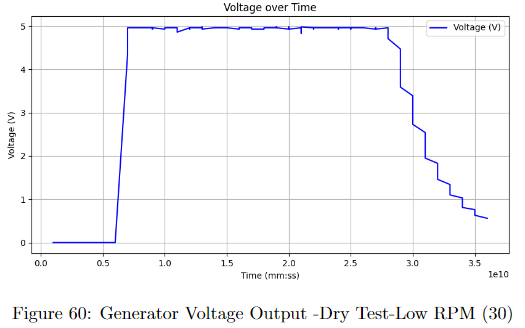
Experimental Energy Production
The energy harvesting system demonstrated a stable voltage output, confirming its feasibility for prolonged deployments in marine environments.
Future Developments
Planned enhancements for the project include:
- Enhanced Power Efficiency: Refining the energy harvesting process for optimal power storage.
- Improved Transmission Stability: Advanced amplification techniques to mitigate interference.
- Extended Sensor Support: Integrating additional sensors for comprehensive environmental monitoring.
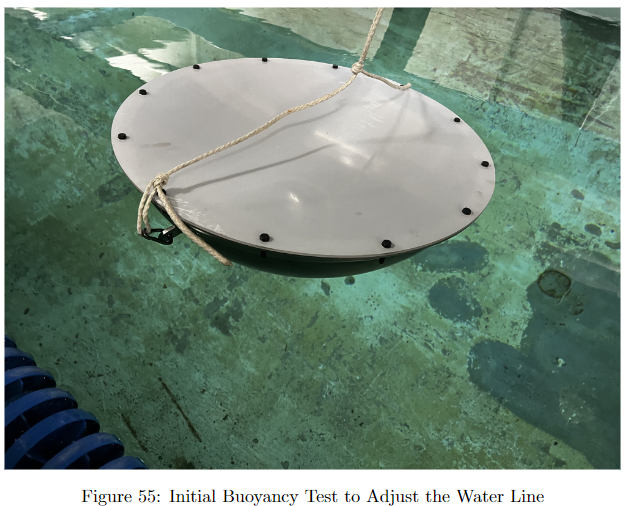
Buoyancy Test
Testing in a controlled environment confirmed the buoy's stability and effectiveness in maintaining proper orientation in turbulent waters.
The findings from this research pave the way for scalable, autonomous marine monitoring systems that contribute to environmental conservation and data-driven decision-making.
Project Repository
You can find the full project on GitHub.